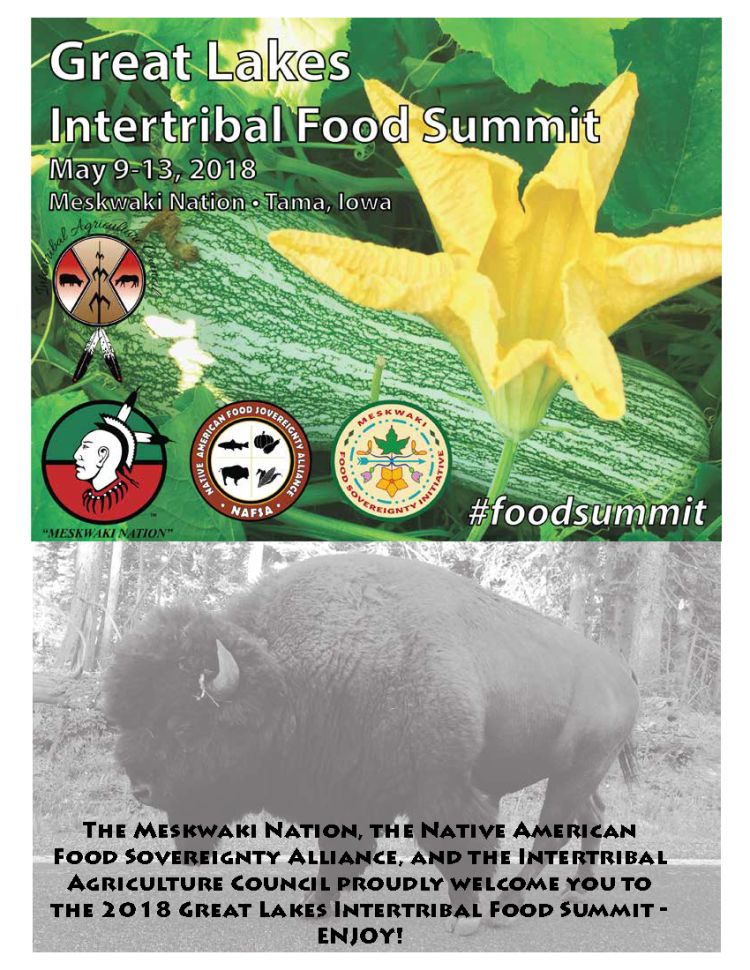
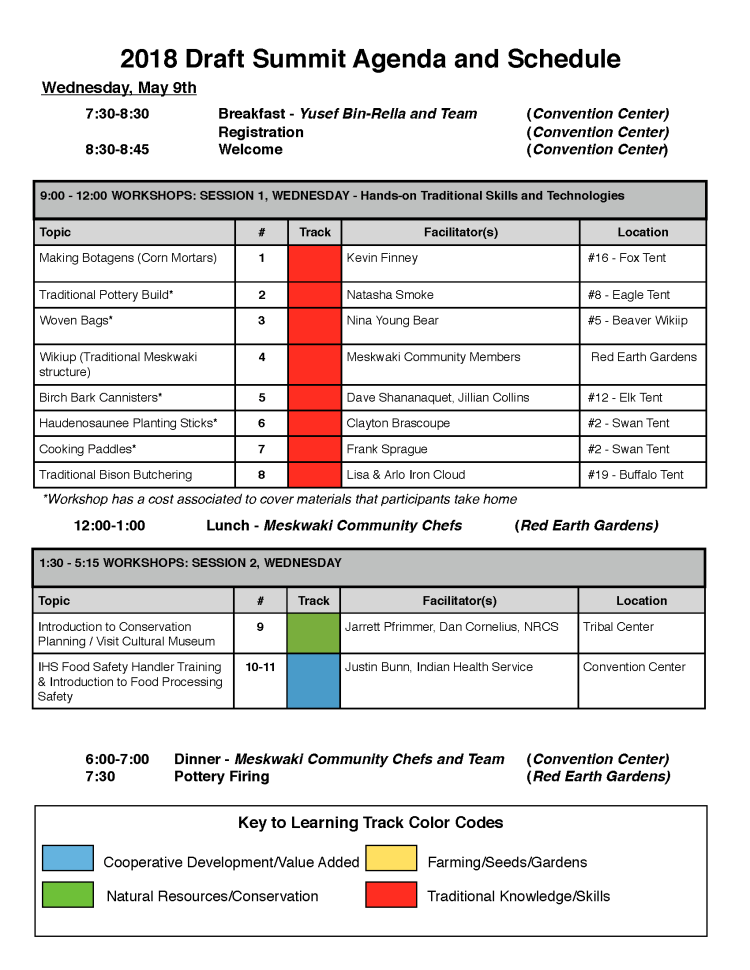
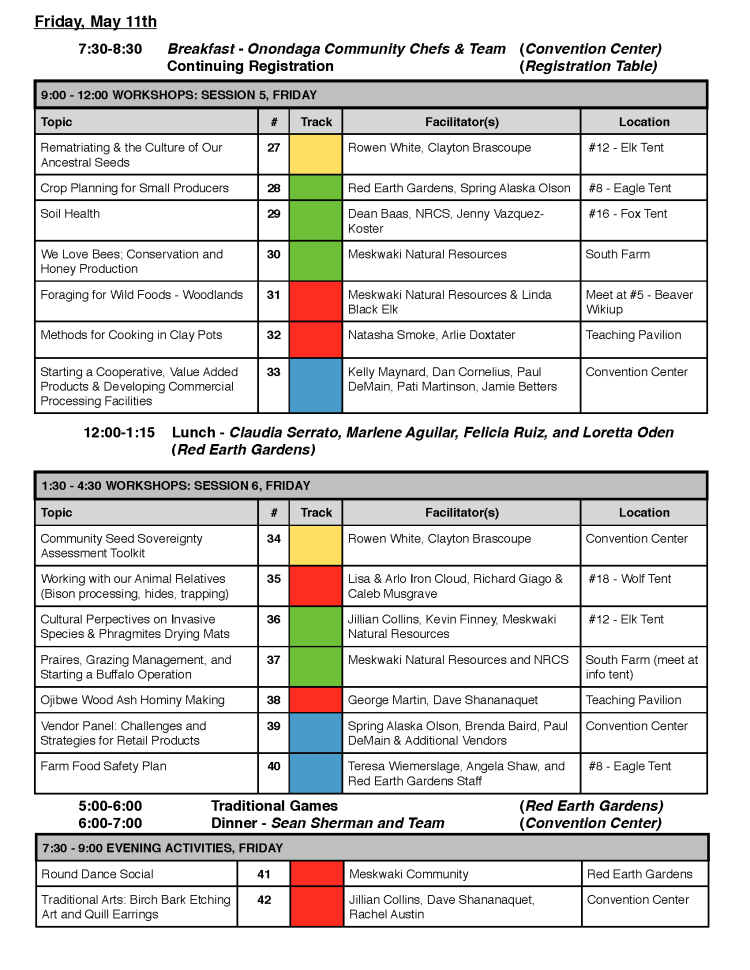
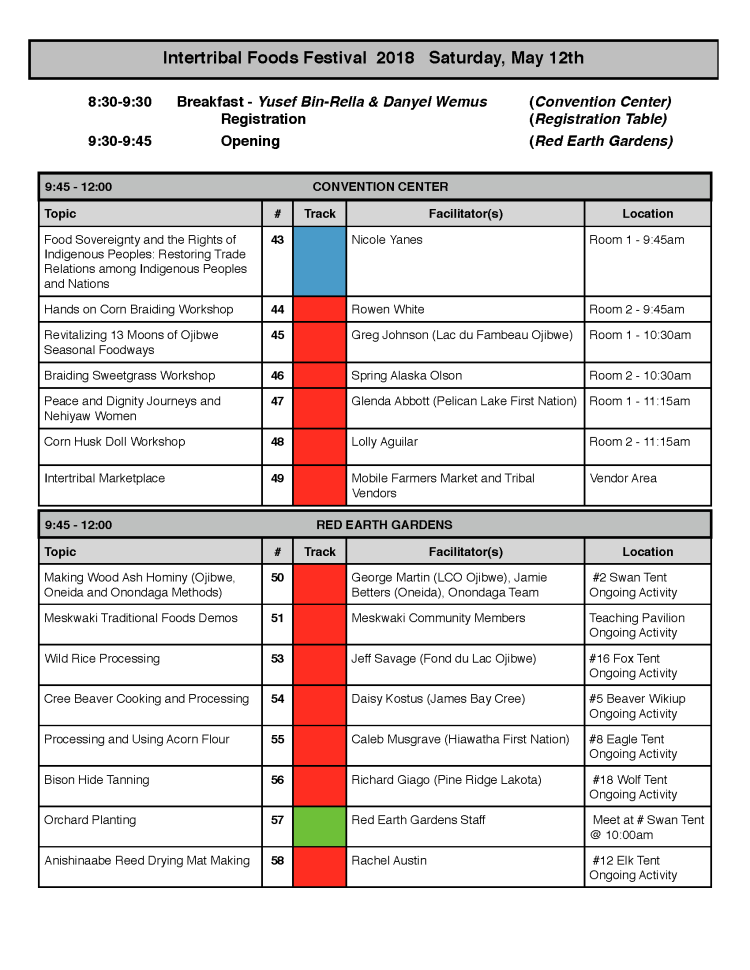
The final agenda for this year’s Great Lakes Intertribal Food Summit at the Meskwaki Nation is now posted. Click here to download the full PDF. Register today if you haven’t already. #foodsummit



Connecting intertribal food and agriculture
The final agenda for this year’s Great Lakes Intertribal Food Summit at the Meskwaki Nation is now posted. Click here to download the full PDF. Register today if you haven’t already. #foodsummit

Following successful past regional food summits at Oneida and, most recently, Gun Lake Pottawatomi’s Jijak Camp this past April, Red Lake volunteered the Fall 2016 Great Lakes Intertribal Food Summit in conjunction with the Intertribal Agriculture Council from September 16-17 with pre-summit workshops on the 14th and 15th.


The pre-summit workshops featured training on federal vendor, organic, and GAP (Good Agricultural Practices) certifications before offering opportunity to tour some of Red Lake’s operations, like the Red Lake Fisheries and Red Lake Nation Foods warehouse.

Two new Tribal facilities, the Tribal administration building and the Red Lake Nation College that served as home base for the summit, provided an amazing setting, directly on the shores of Red Lake, with the directly adjacent powwow grounds offering excellent outdoor gathering, cooking, and instructional space. Friday morning workshops included 1) “Harvesting from the Forest” that covered in-depth foraging and fall preparations for spring tree tapping season and 2) “Soil Health” led by USDA’s Natural Resource Conservation Service (NRCS) and University of Minnesota-Crookston.
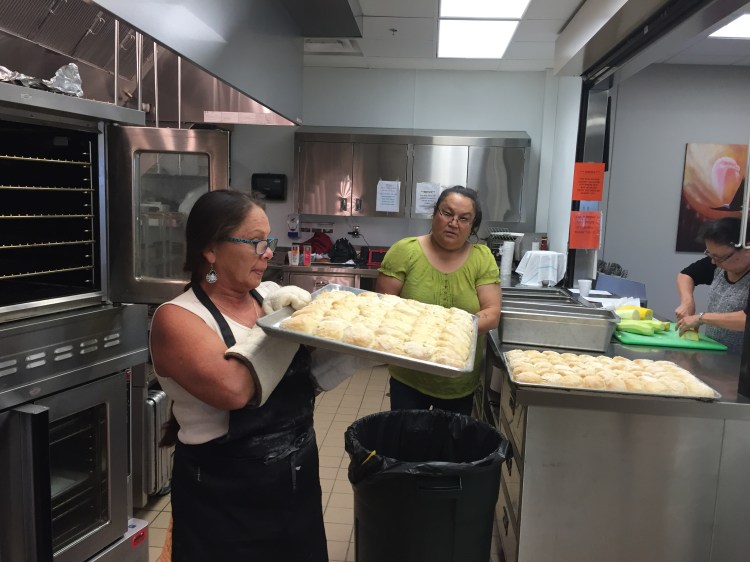
Behind-the-scenes efforts on Friday morning also included a partnership with Red Lake’s Elderly Nutrition Program (ENP) program, which was able to serve lunch featuring buffalo stew donated by the Intertribal Buffalo Council (ITBC) and homemade biscuits prepared by the Onondaga Nation chefs.


Similar to the Spring 2016 Great Lakes Intertribal Food Summit at Jijak, this event featured Native chefs preparing Indigenous foods for all meals. Brian Yazzie and Tashia Hart from the Sioux Chef led a team that also included Neftalí Duran, the Onondaga Nation, and students and instructors from United Tribes Technical College’s (UTTC) culinary program.


Friday afternoon workshops covered 1) “Grazing 101” with instruction from NRCS, Society for Range Management (SRM), and ITBC and 2) “Indigenous Seed Keeping” led by Rowen White and Zach Paige.

Several vendors, including IAC’s Mobile Farmers Market, setup throughout the event, offering a variety of Indigenous foods and outreach on efforts relating to Tribal food and agriculture.


Saturday’s “Intertribal Foods Festival” combined continuing education with morning presentations before the event shifted outside to demonstrations and hands-on activities. The Sioux Chef, Sean Sherman, highlighted the top Native chef lineup that served lunch featuring small plates while hominy continued cooking in kettles, wild rice was traditionally finished, and whitefish smoked for hours.


Traditional botagens (the large pestle and mortar pictured above) seed cleaning were interspersed with a presentation from Sean Sherman, continued cooking, and a sapping talking circle complete with equipment demonstrations. The clouds then cleared in mid-afternoon, providing a perfect setting for husking and braiding heirloom corn.


Partnership and support from the Red Lake Nation and its community members helped make the event so special and memorable. Red Lake hunters contributed multiple deer, including the grilled steaks (above) and the Red Lake Local Food Initiative contributed an assortment of vegetables to compliment the walleye and whitefish donated by the Red Lake Fishery. The Onondaga Nation further supplemented that fish with a huge cooler of New York fish.

The Intertribal Agriculture Council offers a huge thank you to the Red Lake Nation and all of our teachers, chefs, sponsors, and participants. We would specifically like to thank our sponsoring organizations, including Blue Cross Blue Shield of Minnesota, the NB3 Foundation, First Nations Development Institute, the Blanden Foundation, the Onondaga Nation, and NRCS.
#1. Foraging for Food, Fuel and Medicines: Hyssop
The Red Lake Ojibwe Nation and Intertribal Agriculture Council (IAC) take you on a short walk along part of the Red Lake Ojibwe Nation’s, Red Lake and the woods that surround it foraging for food, fuel and medicines as part of the Great Lakes Intertribal Fall Food Summit held at Red Lake, Minnesota during September of 2016.
#2. Foraging for Food, Fuel and Medicines: American Basswood
Here is Kevin Finny, Director of the Jijak Foundation for the Gun Lake Pottawatomi in Michigan speaking about the use of American Basswood, one of several species of trees identified during the fall 2016 Intertribal Food Summit held on the Red Lake Ojibwe Nation during September.
#3. Foraging for Food, Fuel and Medicines: Milkweed
With Kevin Finney, executive director of the Gun Lake Pottawatomi’s Jijak Foundation and Tashia Hart of the Sioux Chef Team in the woods and fields of Red Lake Ojibwe Reservation foraging for food, fuel and medicines as part of the Great Lakes Intertribal Fall Food Summit sponsored by the Intertribal Agriculture Council during September of 2016.
#4. Sapping Black Walnut and other trees
Forest Specialist Kevin Finney discusses a few things they learned while sapping Black Walnut trees — one of them, the emergence of a by-product called pectin.
As part of the Food Sovereignty movement in Indian Country the Intertribal Agricultural Council and the Red Lake Ojibwe held a Great Lakes Intertribal Food Summit in Red Lake during September of 2016 featuring foraging for food, workshops on soil, traditional economies, and related subjects while featuring several Indigenous chefs and Native cuisine for two days.
The 2016 Great Lakes Intertribal Food Summit held at Gun Lake Pottawatomi’s Jijak Camp from April 21-24 was a tremendous success due to an amazing turnout of individuals and groups willing to share their unique skills and knowledge. Search #foodsummit and #jijak for event pictures and posts.


Thirteen workshops covered a diverse variety of topics relating to Tribal food and agriculture on Thursday and Friday, leading to the Intertribal Foods Festival on Saturday. Notably, the concurrent Native Youth in Food & Agriculture Great Lakes Regional Summit began Thursday evening as Tribal youth from around the Great Lakes region arrived and then spent the next three days learning and expanding their knowledge.

Seed Saving (led by Rowen White and Clayton Brascoupe)Continue reading “Great Lakes Intertribal Food Summit – Event Summary”
PROGRAM REBROADCAST from Saturday April 23rd, 2016:
Four Presentations = 2 hours, 59 minutes video
#1. Treaties and Food Systems – Martin Reinhardt, 0-1hr. 2min
#2. at 1hr. 2 minutes until 1hr. 32min –
Gun Lake Wild Rice Restoration Efforts – Elizabeth Binoniemi-Smith,
#3. at 1hr 32 minutes until 2hrs 11 – min – Agricultural Archeology – Bill Gartner
#4. at 2hrs 10 minutes until end – Historical Foods Systems by Paul DeMain
Introduction to one of several workshops at the Great Lakes Intertribal Food Summit devoted to collecting seeds and creating seed banks, how to prepare and preserve your seeds is given by Rowen White, (Akwesasne Mohawk).
The day before the official opening of this year’s annual Great Lakes Intertribal Food Summit, Kevin Finney the director of the Gun Lake Pottawatomi Tribe’s Jijak Camp, the host of the event discusses evaporating at the Tribe’s sugar shack.
The four day conference opened on Thursday April 21st, with 4 days of activities around Food Sovereignty with Indigenous growers, producers, program managers and agency resources on site. The conference also features over a dozen Indigenous chefs from through-out the western Hemisphere cooking the meals with Native foods, spices and medicines.
Here is the almost final program for the 2016 Great Lakes Intertribal Food Summit (click the link below). We’re working on a few small updates before sending the printer, but here’s your first sneak peak. Among the many highlights, we’re excited to feature
Have a WordPress.com account? Log in now.


